
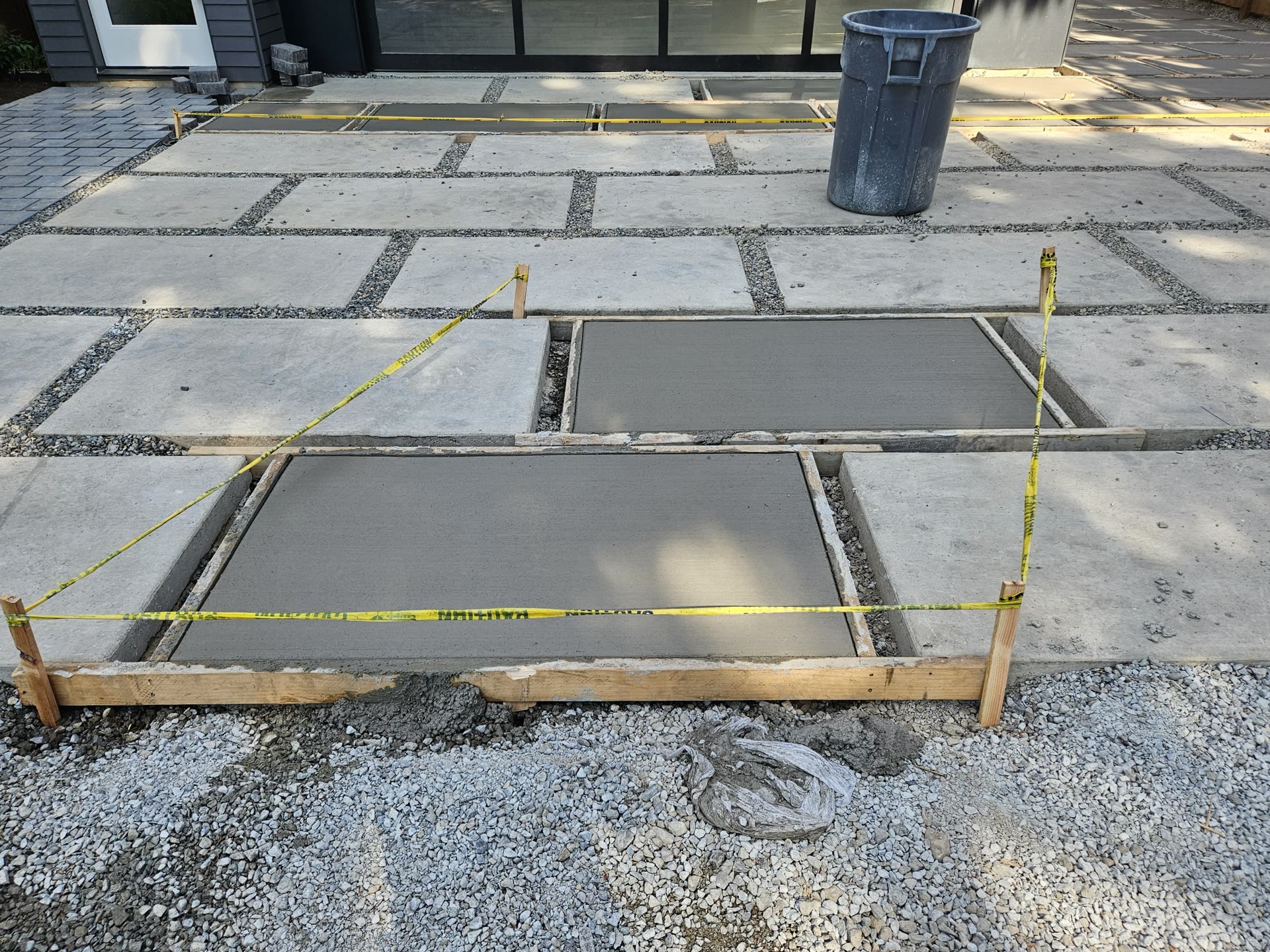
▲ Hiring and Planning
Questions to Ask Before Anyone Pours Concrete on Your Property
A few good questions before the pour tell you most of what you need to know.
Will you come and look?
An estimate should follow a look at the job.
What goes under it?
Ask about base material, depth and compaction.
How thick, and what steel?
Get both written down.
Where will the water go?
Slope and drainage should be part of the plan.
What happens to the old concrete?
Removal and hauling should be stated.
Which finish, and where are the joints?
Both should be agreed before the pour. The hiring guide, the written scope post and the cost guide go further.
What to look at on your own property first
Questions land better when you know your own site. Before talking to anyone, walk the area where the concrete will go. Look at how water moves in a heavy rain, where it pools and which way it runs. In Pierce and King County, many yards stay wet through the colder months, so a slab's slope and base matter more than they might elsewhere. Note any old concrete, how it has failed, and whether it has sunk, cracked or lifted, because that hints at what is happening underneath.
Look at access as well. A concrete truck and other equipment need a route to the work, so note gates, narrow side yards, soft lawn and overhead wires. Think about what you know is buried: septic tanks and lines, water lines, irrigation and electrical runs. Having this in mind lets you ask better questions and judge the answers.
What the answers mean
When you ask about the base, a clear answer names the material, how deep it goes and how it is compacted. When you ask about thickness and steel, a clear answer gives a thickness and names the reinforcement, such as rebar or wire mesh. On drainage, a clear answer says which way the slab will fall and where the water ends up. On old concrete, a clear answer says whether breaking it out and hauling it away are included. On finish and joints, a clear answer names the finish and describes where the joints will go.
Plain explanations of the terms
Base is the layer of crushed rock under the slab. Compaction is pressing that base down in layers so it will not settle. Reinforcement is the steel placed in the slab. Slope, or fall, is the gentle tilt that moves water off the surface. Haul-off is carrying old concrete away from the property. Control joints are the lines cut or tooled into the slab to guide where shrinkage cracks form. Scope is the description of what work is included in the job.
How the conversation usually goes
Most homeowners start by asking about price, then find that the questions above explain why prices differ. A short list, written down and asked the same way of everyone you talk to, makes it easier to compare answers side by side. If an answer is vague, it is fair to ask again or to ask for it in writing. The goal is to know what will be built before anyone orders concrete.
Our guide to Mistakes to Avoid When Hiring a Concrete Contractor explains these questions in more depth.
Common questions
Is it rude to ask this many questions?
No. These are normal questions about work that will sit on your property for a long time, and clear answers help everyone agree on the job.
What if two answers are very different?
Compare what each one includes. Differences in base, thickness, steel and removal often explain why two prices are far apart.
Should I ask about the finish even if I have not decided?
Yes. Broom, stamped and topcast are chosen at the time of the pour, so it helps to know the options early and settle the choice before the concrete is ordered.
What should I ask about the ground under the slab?
Ask whether soft or wet ground will be dug out and replaced, and what happens if poor ground is found once digging starts. On wet lots, that answer shapes how the slab holds up.
Should I ask where the truck will go?
Yes. Ask how the concrete will reach the forms and whether any lawn, drive or garden along the route may be disturbed.
Ready to talk about your project? Request a free estimate.
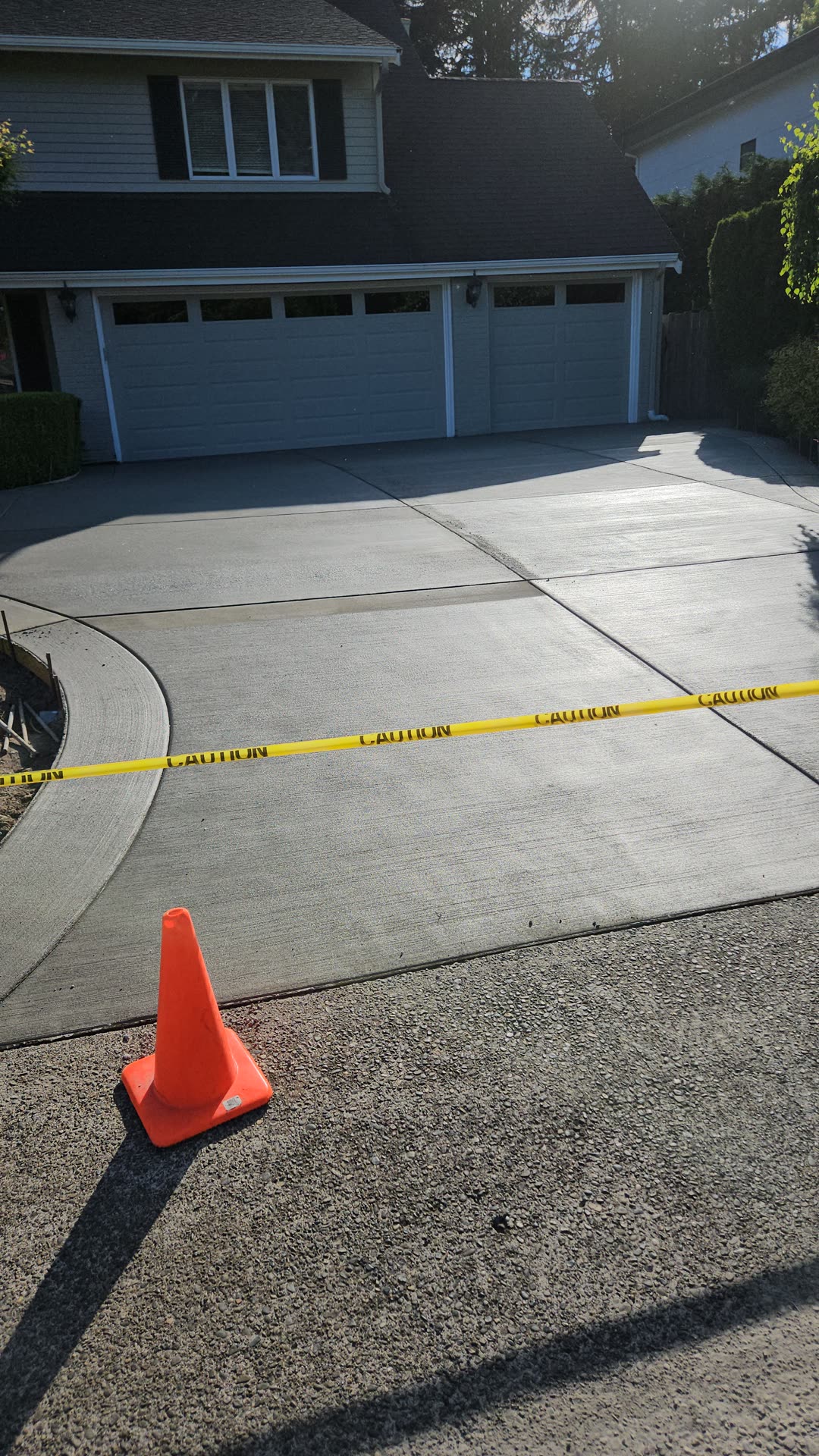
Get your free estimate
- 1You send the form.
- 2We get in touch.
- 3We come and look at the job.
- 4You get it in writing.
- 5You decide.
Call
(253) 271-4640Hours
- Monday–Friday, 7 a.m.–7 p.m.
- Saturday, 7 a.m.–3 p.m.
- Closed Sunday
Based in
Orting, WA
Request Your Free Estimate
No pressure, and no obligation. We come and look at the job before we give you a number.