
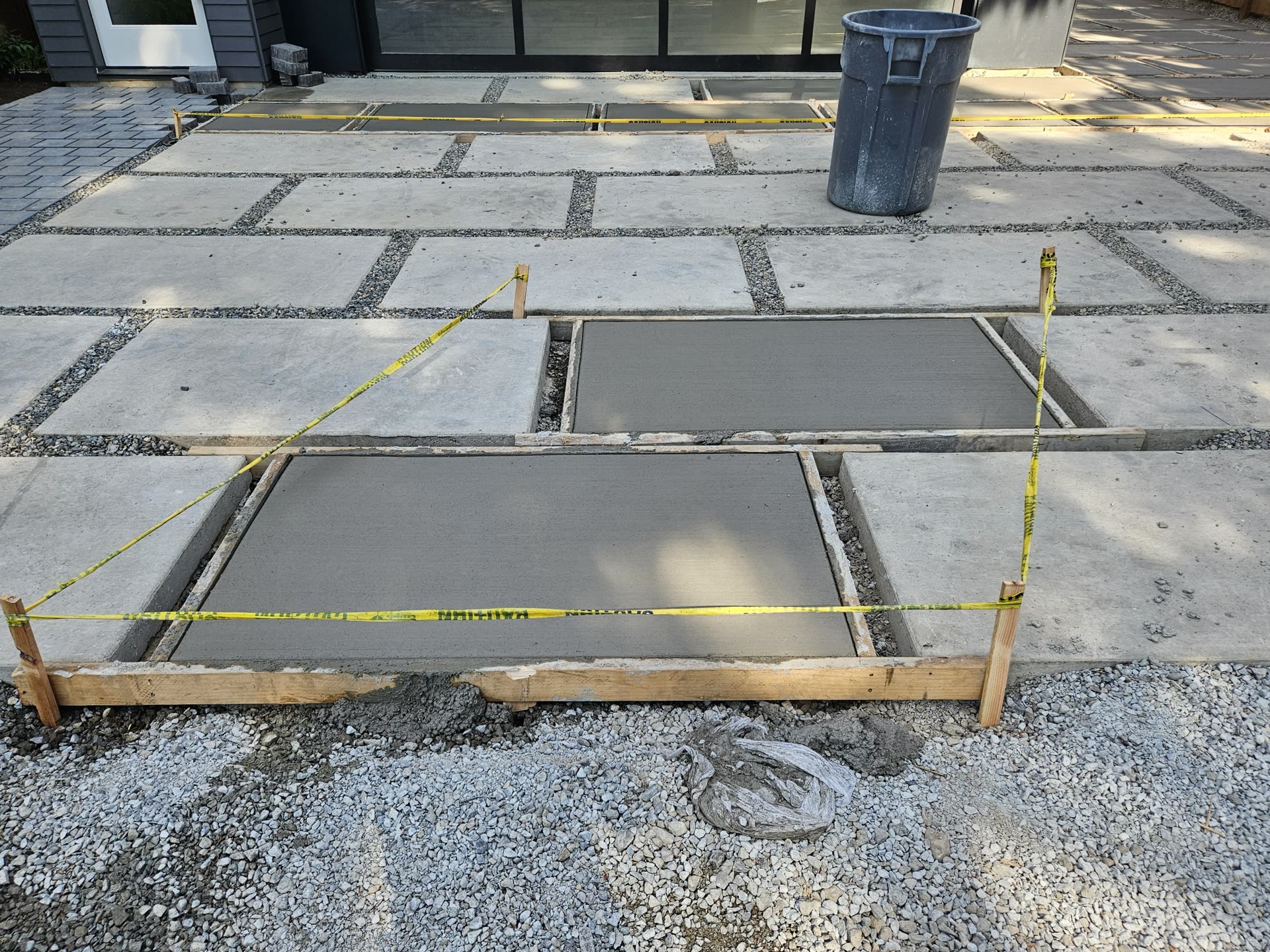
▲ Cost
What Drives the Cost of a Concrete Pour Up, and What Brings It Down
Some cost drivers are fixed by the site. Others are choices. Knowing which is which helps you decide where to spend.
What pushes it up
Old concrete to remove, poor access, soft ground, lots of dirt to move, complicated shapes, decorative finishes, and distance from Orting.
What brings it down
Simple shapes, good truck access, a site that is already near grade, and a broom finish.
Where not to save
Base preparation and drainage. Saving there usually costs more later.
Where saving is fair
Shape and finish are choices. A simpler outline or a broom finish can be the right call.
Getting it right
The estimate visit is where these choices get made. The cost guide covers each driver, and the quotes post explains comparing estimates.
What to look at on your own property
Walk the area with the cost drivers in mind. Note what is there now. Old concrete has to be broken out and hauled away, while lawn or gravel may only need digging out. Look at the ground after rain: soft, wet ground in Pierce and King County often needs more digging and more base material before a slab can go in. Look at how level the area is compared with where the finished slab needs to sit, since a lot of soil to cut or fill means more work.
Look at the route a truck would take and how far the forms are from where it can park. Look at the shape you have in mind. Curves, angles, cutouts around posts and several levels all take more forming and more care than a plain rectangle. Note any steps, landings or edges that would be part of the job, since each one adds forming and finishing.
Plain explanations of the terms
Grade is the height of the ground. Near grade means the ground already sits close to where the base needs to be. Cut is soil removed to lower the ground; fill is material added to raise it. Forming is setting the boards that hold the concrete to shape. Base preparation is digging out unsuitable ground, placing crushed rock and compacting it. A decorative finish is stamped or topcast, chosen at the time of the pour; a broom finish is the plain, textured standard.
Trade-offs to weigh
Some drivers come from the site and cannot be changed, such as soft ground, a steep slope or a tight route in. Others are choices. A simpler outline uses less forming. A broom finish takes less work than stamped or topcast. Pouring a smaller area now and adding more later is possible, but it means a seam between old and new and some work done twice. Base and drainage are the places where cutting back tends to show up later, because a slab is only as sound as what is under it.
How the decision usually goes
Most homeowners start with a size and a finish in mind, then adjust once they see what the site needs. The usual order is to settle the parts the site dictates, such as removal, base and drainage, and then decide on shape and finish to suit the budget. Some choose a broom drive and a decorative patio, putting the extra work where it is seen most.
Our guide to How Much Concrete Work Costs explains each driver in more detail.
Common questions
Does a bigger slab always cost more?
More area means more concrete and more work, but site conditions can matter as much as size. A small slab with hard access and old concrete to remove can take more work than a larger, open one.
Is a broom finish a lower-quality option?
No. Broom is a plain, practical finish with good grip in the wet. It costs less because it takes less work at the time of the pour.
Can I save by doing the removal myself?
It is worth asking about. Breaking out and hauling concrete is heavy work, so be sure of what you are taking on and agree on it in writing.
Does distance from Orting change the price?
Travel is one of the drivers. It is usually a smaller part of the total than removal, base preparation, access and finish.
Ready to talk about your project? Request a free estimate.
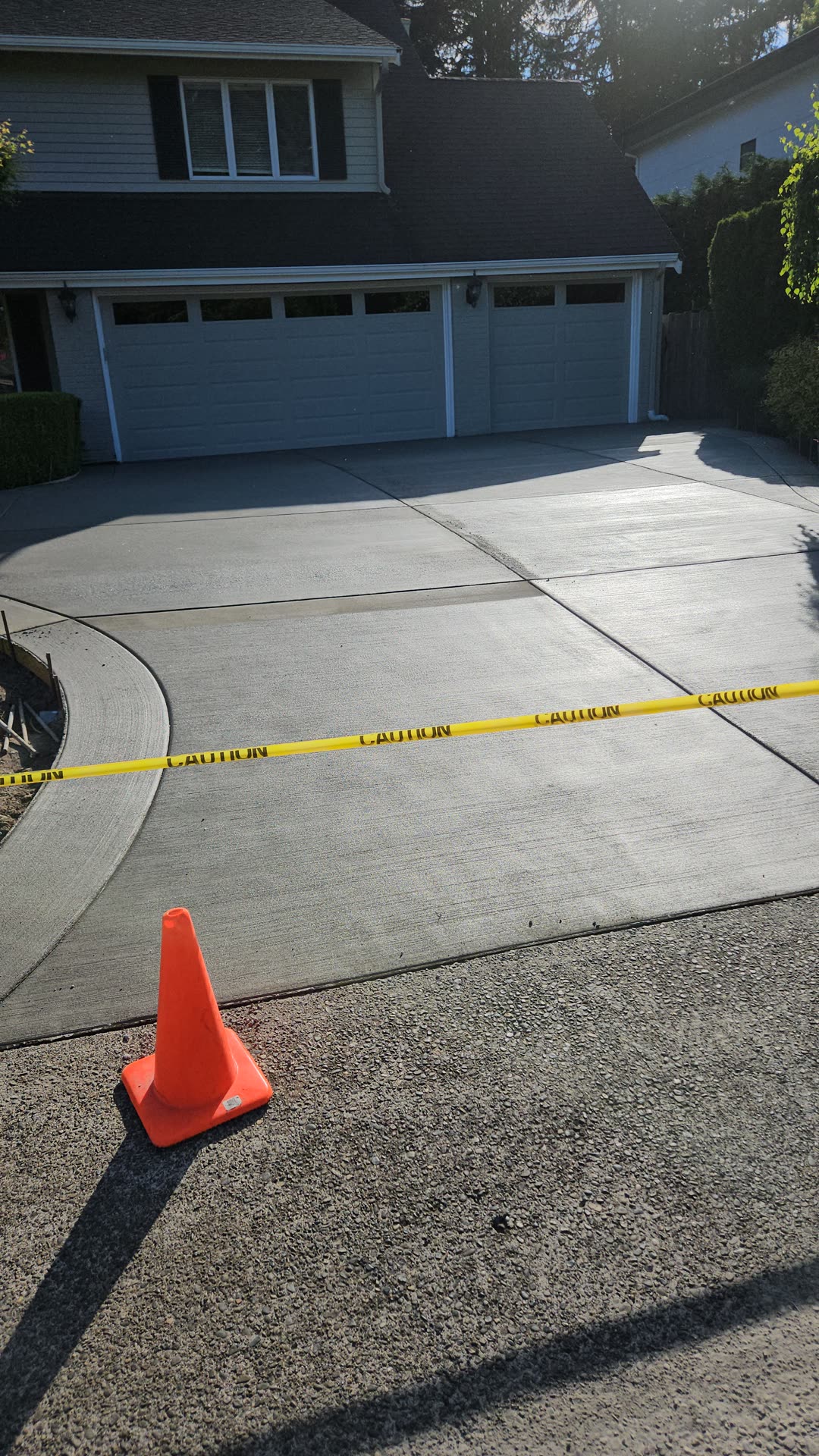
Get your free estimate
- 1You send the form.
- 2We get in touch.
- 3We come and look at the job.
- 4You get it in writing.
- 5You decide.
Call
(253) 271-4640Hours
- Monday–Friday, 7 a.m.–7 p.m.
- Saturday, 7 a.m.–3 p.m.
- Closed Sunday
Based in
Orting, WA
Request Your Free Estimate
No pressure, and no obligation. We come and look at the job before we give you a number.