

▲ Guide
Problems With Concrete Flatwork in Washington, Explained
Concrete is a good material for a lot of jobs, but it has limits, and it helps to know them before you pour. This page covers the honest version: what goes wrong, why, and what can and cannot be controlled.
Concrete cracks
All concrete shrinks as it cures and moves with temperature and moisture after that. Hairline shrinkage cracking is normal in any slab. Control joints give that movement a place to happen, and reinforcement holds cracked sections together. The cracks that matter are the ones that open wide, offset, or let one side drop, and those usually trace back to the base. Read more in why concrete cracks, and which cracks actually matter.
What wet winters do to a surface
In a wet climate, water gets into the top of a slab, and when that water freezes it can break the surface away in flakes. That is called scaling. How the concrete was placed and finished affects how well it resists it, and so does what gets put on it in winter. The scaling post explains it in more detail.
Where water goes wrong
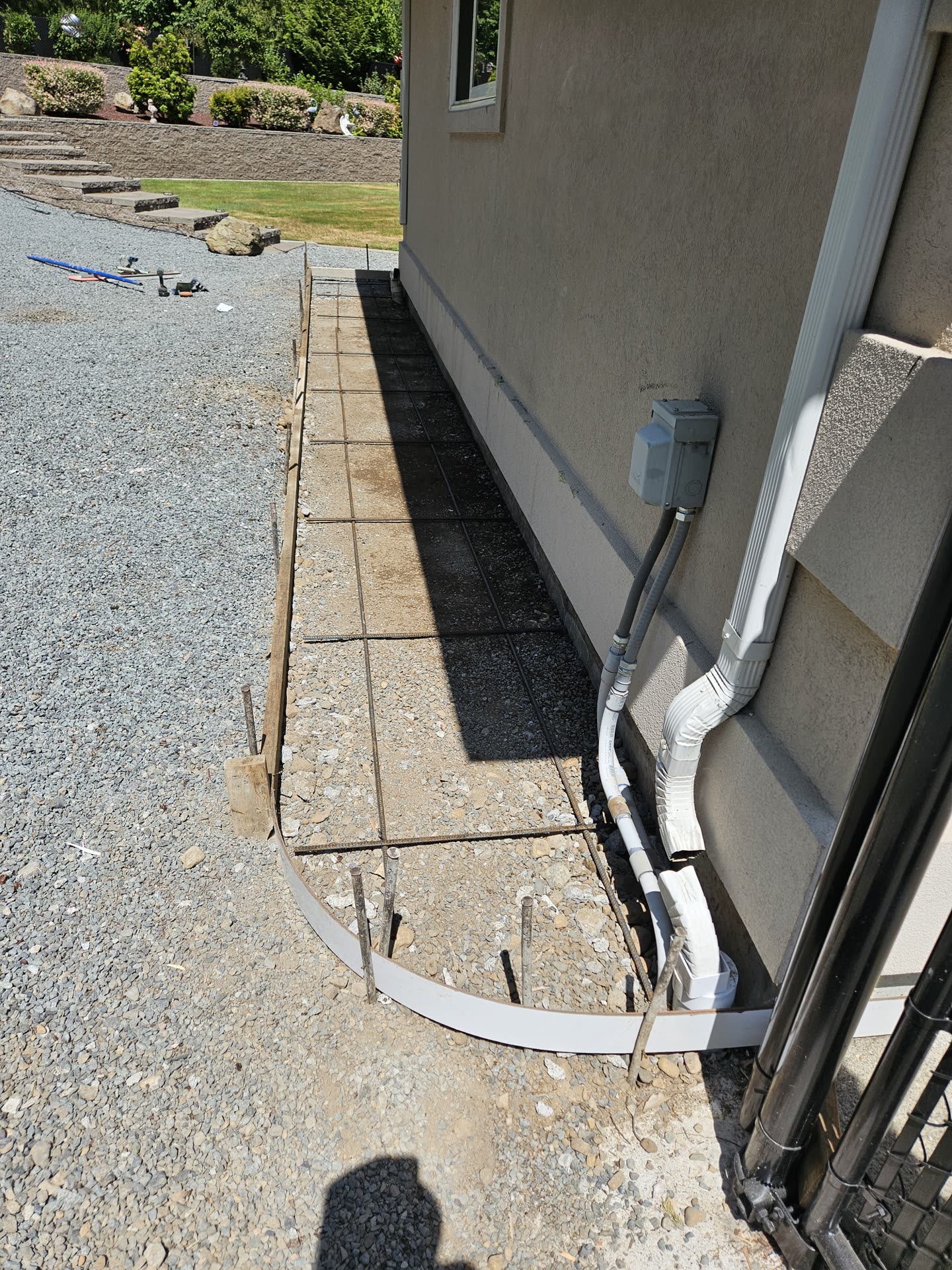
Most problems on a slab start with water: water sitting on it, water running under it, or water pooling against the house beside it. Slope on the surface and a base that drains are the two things that control it.
Where concrete is the wrong material
Some jobs suit something else better: a surface you want to lift and relay, a spot under trees with roots on the move, or ground that will keep settling. The post on where concrete is the wrong material goes through them honestly.

Get your free estimate
- 1You send the form.
- 2We get in touch.
- 3We come and look at the job.
- 4You get it in writing.
- 5You decide.
Call
(253) 271-4640Hours
- Monday–Friday, 7 a.m.–7 p.m.
- Saturday, 7 a.m.–3 p.m.
- Closed Sunday
Based in
Orting, WA
Request Your Free Estimate
No pressure, and no obligation. We come and look at the job before we give you a number.